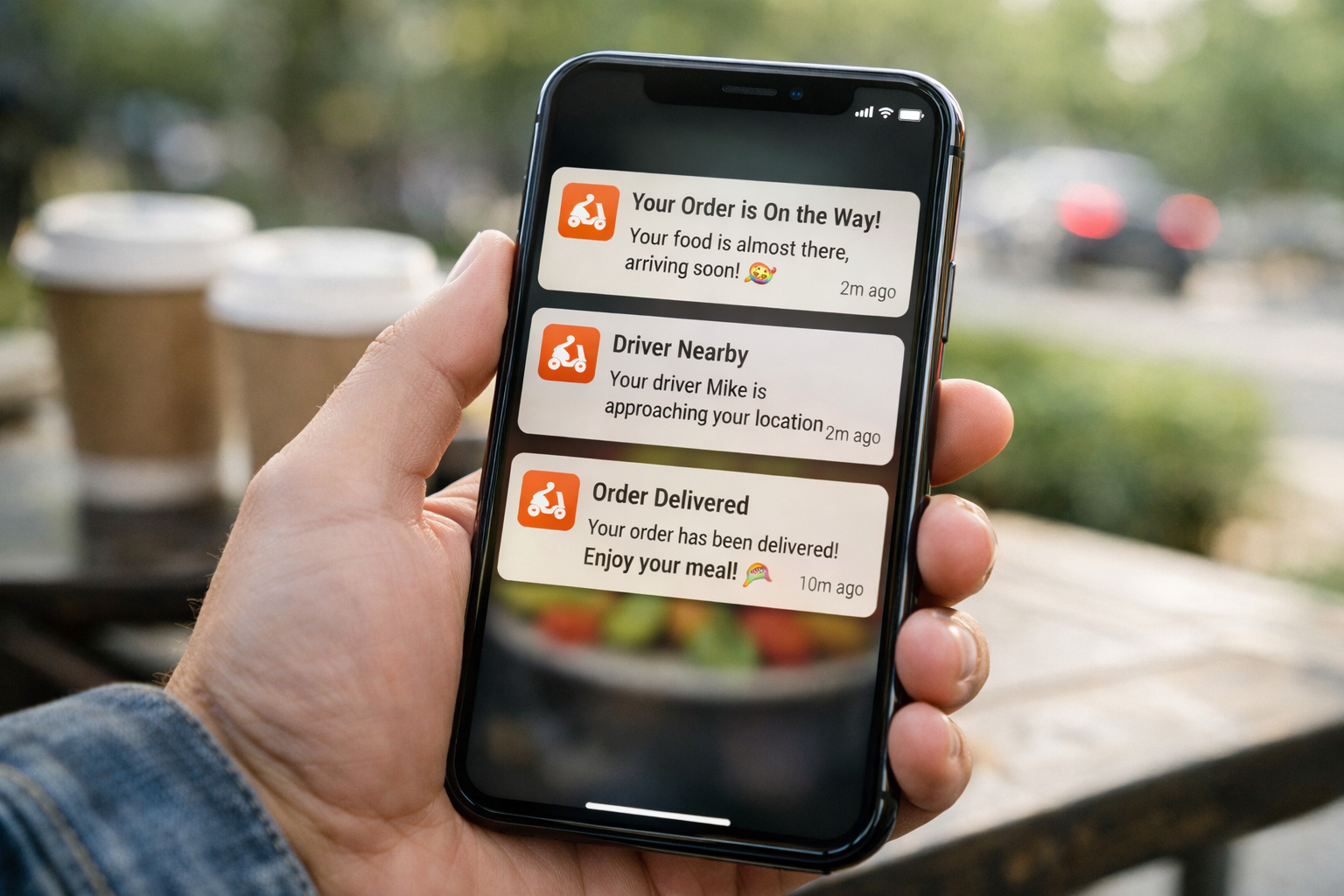
Push notifications are a core part of any delivery app experience. They keep customers informed about their orders, remind them to come back, and help businesses increase repeat deliveries.
However, when delivery push notifications are overused or poorly written, customers quickly get annoyed. Many mute notifications, and some even uninstall the app.
In this article, you’ll learn delivery push notification strategies that engage customers without pushing them away.
Why Delivery Push Notifications Often Fail
Delivery push notifications usually fail because they focus too much on promotion and not enough on usefulness. When customers receive repeated discount alerts or generic messages that don’t relate to their current order, notifications start to feel like spam.
Successful delivery apps understand that notifications should feel like helpful updates — such as confirming an order, announcing that a courier is nearby, or notifying users about a real delivery issue — rather than constant sales messages.
1. Send Delivery Notifications That Improve the Experience
Every delivery push notification should make the customer’s experience better. Notifications work best when they provide real-time updates, such as confirming that an order has been placed, letting the customer know their delivery is on the way, or informing them about a delay before they get frustrated.
When notifications don’t add value to the delivery process, customers see them as interruptions instead of support.
2. Personalize Delivery Notifications for Each Customer
Personalization makes delivery notifications feel thoughtful instead of automated. Customers respond better when notifications mention something familiar, such as a restaurant they often order from or a product they buy regularly.
For example, reminding a customer that their favorite restaurant is offering fast delivery tonight feels more relevant than sending the same promotion to everyone. This small personal touch can significantly increase engagement.
3. Send Delivery Notifications at the Right Time
Timing is just as important as the message itself. A delivery offer sent around lunch or dinner time feels natural, while the same notification sent early in the morning or late at night feels intrusive.
By sending notifications when users are most likely to order, delivery apps stay helpful without being disruptive.
4. Keep Delivery Messages Short and Easy to Understand
Delivery push notifications should be easy to read at a glance. Customers usually check them while multitasking, so messages need to be clear and simple.
A short message that tells a customer their delivery is arriving in a few minutes works much better than long, technical language that sounds formal or robotic. Simple wording creates trust and clarity.
5. Let Customers Control Their Delivery Notifications
One of the easiest ways to avoid annoying users is giving them control over what they receive. Some customers only want delivery updates, while others enjoy promotional offers.
Allowing users to choose their notification preferences — such as turning off promotions or pausing notifications — helps keep them engaged without feeling overwhelmed.
6. Use Delivery Notifications to Build Trust, Not Just Sales
Delivery push notifications don’t always need to drive sales. They can also strengthen the relationship with customers by thanking them for an order, confirming a successful delivery, or asking for quick feedback.
These small, thoughtful messages show that the app cares about the delivery experience, not just transactions.
7. Track and Improve Your Delivery Notifications
To improve delivery push notifications over time, businesses should monitor how users respond. Open rates, order activity, and uninstall behavior all provide valuable insights.
By testing different message styles, timing, and frequency, delivery apps can continuously improve engagement while avoiding notification fatigue.
Smarter Delivery Notifications Start with the Right Platform
Delivery push notifications should feel like useful service updates, not constant interruptions. When used correctly, they increase customer trust, improve the delivery experience, and encourage repeat orders.
With platforms like Zeew, businesses can build their own delivery apps and manage notifications with full control — from personalization to timing — without relying on third-party marketplaces.
Learn more about building smarter delivery experiences at https://zeew.eu/