Launching a delivery app can look simple from the outside. Many founders think: “It’s just orders, drivers, and payments.”
In reality, most delivery apps fail because of avoidable mistakes made early on.
In this article, we break down the top mistakes founders make when launching a delivery app and how you can avoid them.
1. Building an App Without Clear Business Goals
Many founders start with “I need a delivery app” but don’t define why.
Common problems:
- No clear goal (more orders? lower commission? faster delivery?)
- No success metrics
- No plan beyond launch
How to avoid this:
Before building, decide:
- What problem the app solves
- How it improves your current delivery process
- What success looks like in 3–6 months
A clear goal leads to a better app.
2. Overbuilding Features From Day One
Founders often try to copy big apps with:
- Too many screens
- Complex features
- Long development cycles
This results in delays and higher costs.
How to avoid this:
Start simple:
- Menu or product listing
- Easy checkout
- Online payments
- Order tracking
Your customers want speed, not complexity.
3. Ignoring the Real Delivery Workflow
A delivery app must match how your business actually works.
Common mistakes:
- No clear order preparation flow
- Confusing driver handoff
- No system for delays or failed deliveries
How to avoid this:
Map the full journey:
Order → Preparation → Dispatch → Delivery → Completion
Your app should support your operations; not fight them.
4. Thinking the App Alone Will Bring Orders
Launching an app does not automatically mean more sales.
Many founders forget:
- App marketing
- Customer onboarding
- Incentives to download and use the app
How to avoid this:
Plan for:
- QR codes in-store
- First-order discounts
- Push notifications
- Loyalty programs
An app is a tool not a marketing strategy by itself.
5. Underestimating Long-Term Costs
Some businesses focus only on building the app and forget ongoing costs like:
- Hosting
- Maintenance
- Updates
- Support
This can make the app unsustainable.
How to avoid this:
Choose a solution with:
Predictable pricing
Included updates
No surprise development costs
6. Poor User Experience on Mobile
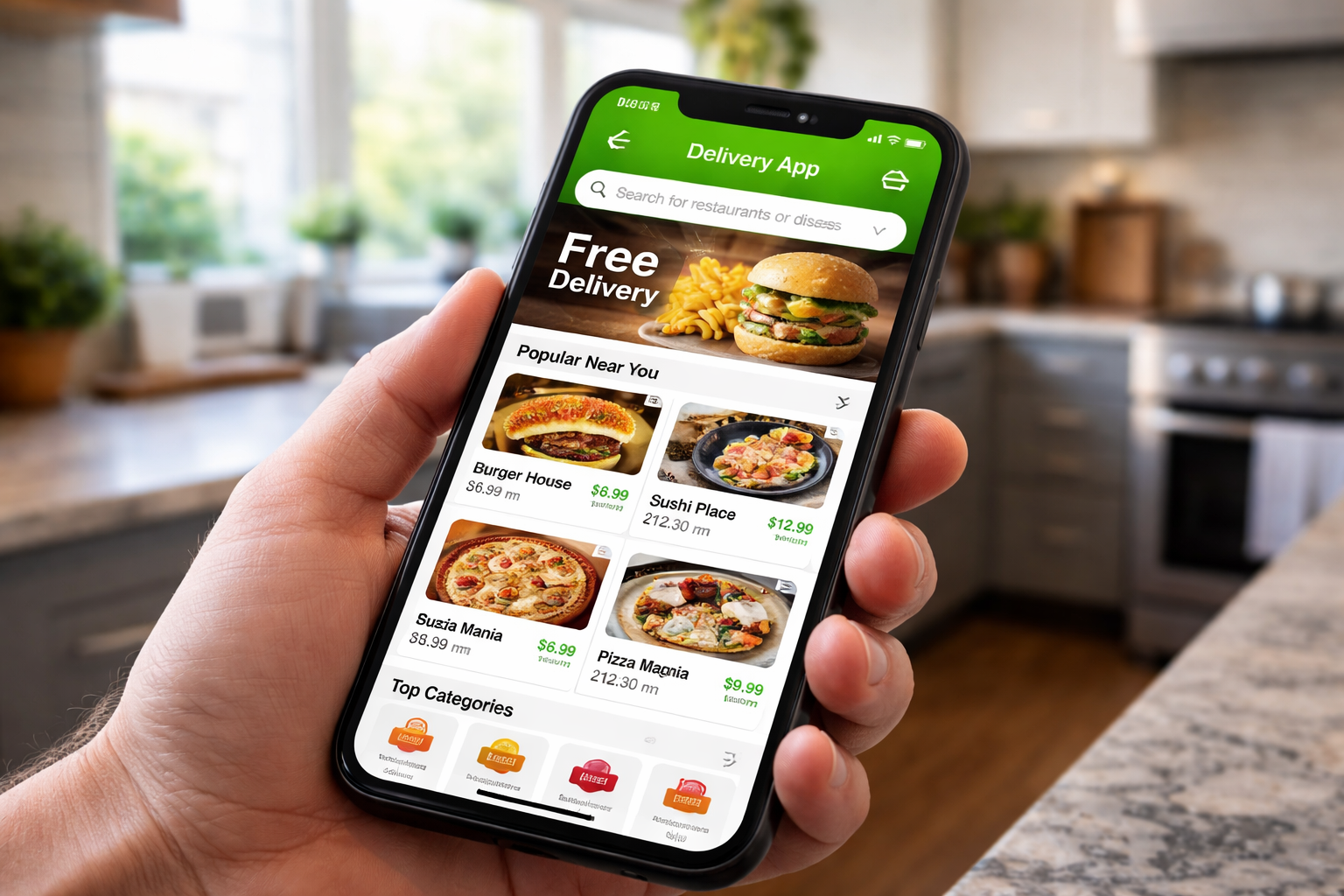
Most delivery orders come from mobile phones.
Common UX issues:
- Too many clicks to order
- Slow loading screens
- Confusing checkout
How to avoid this:
- Keep the order flow short
- Optimize for mobile first
- Make reordering easy
If ordering feels hard, customers won’t return.
7. Depending on Custom Development Too Early
Custom-built apps sound attractive but often cause problems:
- High upfront cost
- Long development time
- Hard to fix bugs
- Slow updates
How to avoid this:
Use a ready-made delivery app solution that:
- Launches fast
- Is already tested
- Can be customized as you grow
8. No Plan for Growth
Even single-brand delivery apps grow:
- More orders
- More drivers
- New locations
If your app can’t scale, it will hold you back.
How to avoid this:
Make sure your app supports:
- Higher order volumes
- Automation
- Future feature expansion
Build Your Delivery App the Smart Way
Launching your own delivery app should help you:
- Own your customers
- Reduce commission fees
- Control the delivery experience
- Grow your brand
Avoiding these common mistakes will save you time, money, and frustration.
Platforms like Zeew help businesses launch their own branded delivery app quickly without coding or expensive custom development. With built-in delivery workflows, payments, and scalability, Zeew lets you focus on running your business while the technology works in the background.